

Let's Not Ignore the Transformative Impact of AI on Disability
Some of the the most transformative AI stories are happening outside the headlines and include innovation that helps those with disabilities flourish. Will a lack of focus on the space hurt?

When most people think about artificial intelligence, they likely picture clever chatbots, future robots, and workplace automation. Compounding this is the fact that the news is full of worst-case scenario stories, billionaire competition, and the most extreme, impractical applications. And that is unfortunate, because what rarely makes the news are the quietly revolutionary ways AI is transforming the daily lives of many—not least among them, those with disabilities.
This oversight reflects a broader and unfortunate pattern in how we discuss technological progress, and it does a great disservice to all of us. While the stories capturing public attention tend to focus on broad market applications, dramatic breakthroughs, or future potential risks, what gets left out are the lived experiences of the communities that could benefit most.
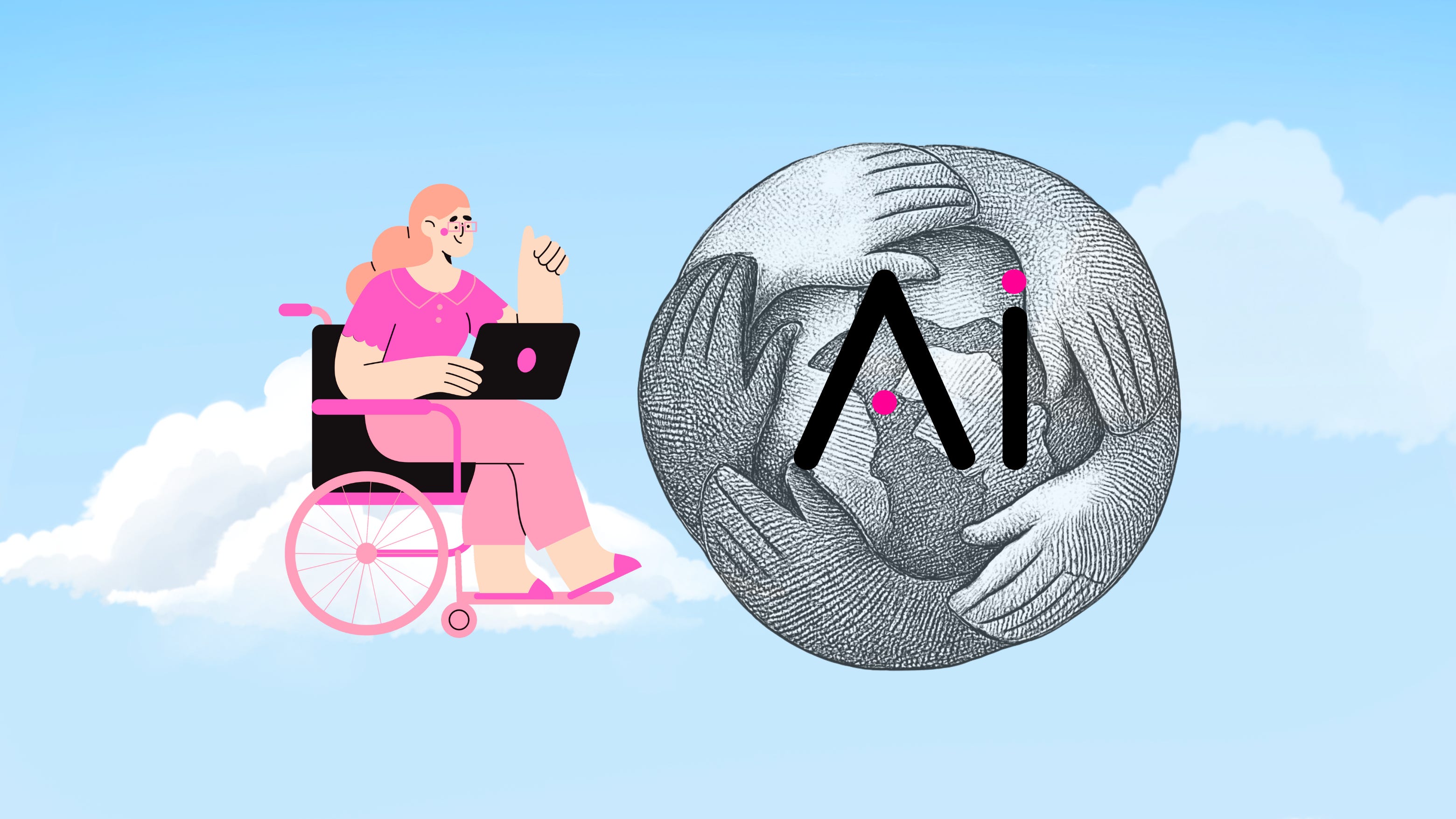
When it comes to disability, we’re not talking about a small group either, as there are over a billion people around the world currently living with some form of disability. And a far larger number of us will experience either short- or long-term changes in our own abilities at some point in our lives. This reality can have a disproportionate impact on women, who face additional barriers in accessing and benefiting from assistive technologies.
We Need More AI Innovation Focused on Women, Disability, and Caregiving + Other News This Week

Is writing about the intersection of women, AI, and the fluidity of individual ability over a lifetime a niche subject? Well, no. But even those of us who believe it’s a broad and sweeping area of focus may still be surprised at the scale of the problem/opportunity.
A Chance for Agency and Autonomy
The most meaningful AI innovations for women and children with disabilities focus squarely on providing individual agency and autonomy. For instance: voice recognition software that understands non-standard speech patterns; computer vision systems that can describe images in real-time for visually impaired students; and predictive text that adapts to individual communication styles.
What all of these tools share is their ability to give independence, autonomy, and personal agency to people with disabilities. This type of empowerment is often overlooked by those debating the pros and cons of AI innovation overall.
Tech journalist Steven Aquino writes about the intersection of technology and disability and put this point brilliantly in a 2024 oped for MIT Technology Review:
“Of course, data needs to be vetted for accuracy and gathered with permission—there are ample reasons to be wary of AI’s potential to serve up wrong or potentially harmful, ableist information about the disabled community. Still, it feels unappreciated (and underreported) that AI-based software can truly be an assistive technology, enabling people to do things they otherwise would be excluded from. AI could give a disabled person agency and autonomy. That’s the whole point of accessibility—freeing people in a society not designed for their needs.”
-Steven Aquino, “AI could be a game changer for people with disabilities,” MIT Technology Review, August 23, 2024
The Gender Gap in Disability Technology
The intersection of gender and disability creates a particularly complex challenge considering the lack of women even shaping AI. In Europe, women with disabilities represent 25.9 per cent of all women in the European Union and over 55 per cent of all persons with disabilities, but when it comes to work in science, technology, engineering and math (STEM), only 1 in 3 STEM graduates are women. It’s a gap that highlights the difficulty in even beginning to address the issue.
Changing the Lives of Kids with Disabilities
While mainstream AI discourse often focuses on productivity and efficiency, some of the most compelling advances are happening in applications designed for children. Recent studies show that AI-powered assistive technologies can significantly improve accessibility for students with disabilities, addressing everything from learning challenges to mobility and communication needs.
For instance, a recent study with 100 children aged 8-12 found that those using AI-based grammar assessment tools with personalized feedback showed significant improvement compared to traditional paper-based testing. The AI tools adapted to each child’s pace and learning style, providing immediate corrections and explanations tailored to specific errors.
In another area entirely, children with autism are benefiting from AI-powered social robotics. Companies like RoboKind and LuxAI are creating tools for emotional training and social-emotional learning. Meanwhile, specialized hiring platforms are emerging to support neurodiverse individuals as they transition to adulthood—addressing the sobering reality that unemployment and underemployment among those with autism can be as high as 90%.

Opportunity Inherent to Inclusion
The future of AI for women and children with disabilities depends largely on who’s included in its development. The economics of disability technology reveal significant opportunity: the global assistive technology market is forecast to reach $31.22 billion by 2030, with 3.5 billion people expected to need one or more assistive products by 2050.
Yet despite this market potential, a funding gap persists. Many disability tech companies must rely on public grants, angel investors, and community support rather than traditional venture capital. As a result, promising innovations often struggle to scale, remaining confined to research settings rather than reaching the families who could benefit most.
Recent policy developments offer hope, however. The European Union’s AI Act, which entered into force in 2024, specifically addresses discrimination prevention for marginalized groups, including people with disabilities. Meanwhile, frameworks like UNICEF’s AI for Children and other emerging guidelines are beginning to center these voices in technology design.
The stories emerging from AI’s impact on disability communities aren’t just feel-good anecdotes either—they’re glimpses of a more inclusive future. When we design technology that works for the most marginalized, we often create solutions that benefit everyone. The question isn’t whether AI can transform lives for women and children with disabilities. It’s whether we’ll prioritize their voices loudly enough to ensure these innovations receive the attention, funding, and development they deserve.
As AI continues to evolve, the experiences of disabled women and children shouldn’t remain footnotes in our technological narrative. They should be at the center, helping us understand what genuine progress looks like when technology truly serves human flourishing.