

How AI Can Change Lives and Other News to Round Out the Year...
We can be skeptical and cautious of AI without ignoring the opportunity that it presents; and to many more people than are usually part of the innovation discussion. This and other news this week...

Hello, subscribers! While I’ve added content here and there to the site over the past year, you’ve not received a newsletter from me with much frequency. But because FromAtoSHE presents such an excellent opportunity to put AI and new technology innovation “into context” that is going to change in the new year.
So starting in January, look for a monthly newsletter with news, profiles, and a review of the issues being debated related to AI and other new technology. Here are a few thoughts to get us started:
AI’s Impact on All Abilities
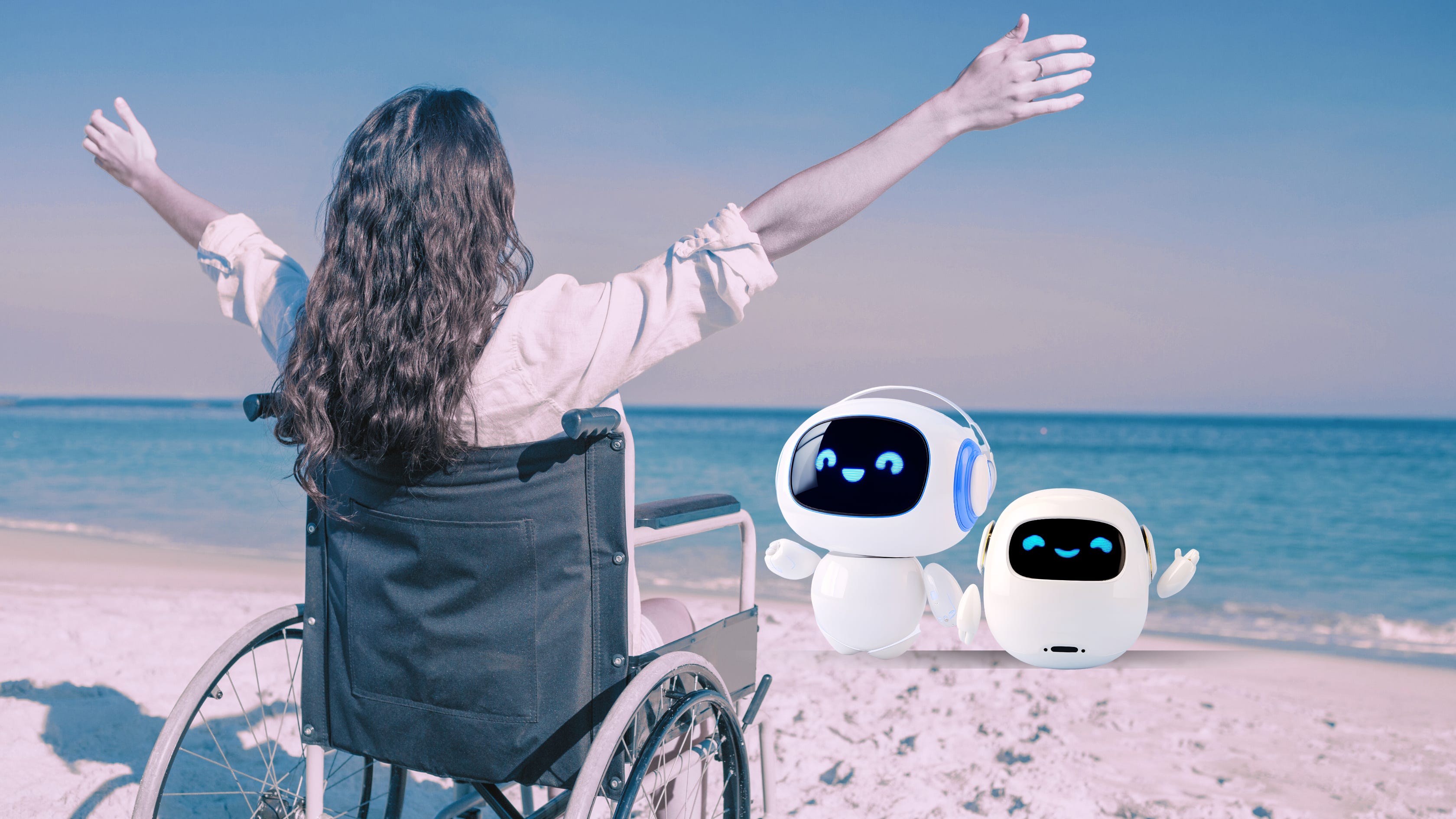
According to the World Health Organization, 16% of the world’s population has some form of serious disability. Additionally, about 5% of the American workforce will experience a short-term disability each year. The numbers add up and mean most of us will experience a short- or long-term disability at some point in our lives. It also means that many more can benefit from accessibility advancements that improve one’s quality of life.
Of course, there is no group more impacted here than women. Not only do women experience disability at higher rates, but we are also the caregivers for our families and loved ones. So we have an additional opportunity to zero in on the needs of women when looking at technology advancements in this space.
None of this means that we should overlook the critical privacy protections that must be in place nor disregard the need for rigor in testing and development of new technology. But it is possible to do it all at once—and we should.
Unfortunately as disability and technology journalist Steven Aquino has argued: we tend to dismiss advancement without thinking about the enormous benefits to more marginalized groups. He put this eloquently in an oped for MIT Technology Review last year:
“Of course, data needs to be vetted for accuracy and gathered with permission—there are ample reasons to be wary of AI’s potential to serve up wrong or potentially harmful, ableist information about the disabled community. Still, it feels unappreciated (and underreported) that AI-based software can truly be an assistive technology, enabling people to do things they otherwise would be excluded from. AI could give a disabled person agency and autonomy. That’s the whole point of accessibility—freeing people in a society not designed for their needs.”
You can also read my article about the gaps we are seeing here and how we need to weigh up the benefits more broadly against the angst we may be experiencing on the subject of AI overall:
Comprehensive AI Guide for Families Now Available!
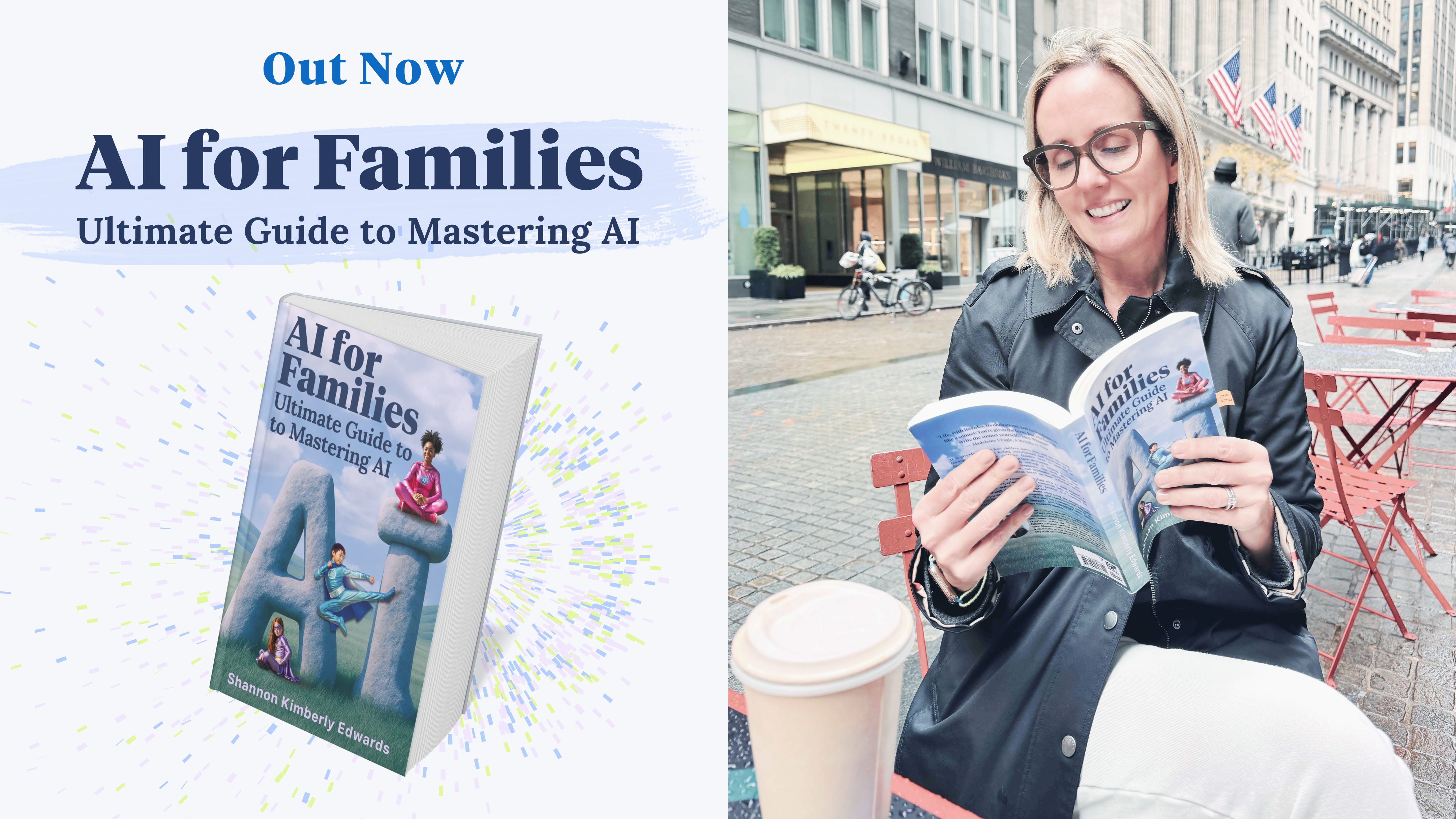
From AI definitions and a review of risks to how families can better advocate for AI policy, understand data privacy, and consider all the opportunities that AI presents, my new book, AI for Families: Ultimate Guide to Mastering AI, is now available everywhere books are sold.
Especially when it comes to supporting kids with learning challenges and other accessibility needs—the idea that AI can be transformative shouldn’t be overlooked.
It’s a topic I delve into in AI for Families. And it’s certainly not a niche issue. According to the National Center for Education Statistics, roughly 15% (7.5 million) of all public school students in the US require special educational accommodations. And of these children, more than 2.4 million have a “specific learning disability” (SLD).
This presents not only an opportunity to introduce meaningful new technology, it’s a way to address gaps in the market as many US school districts struggle to hire special education teachers. In fact, according to a 2024 report from the US Department of Education’s National Center for Education Statistics, 74% of elementary and middle schools and 66% of high schools reported difficulty finding fully certified educators to fill special education teaching roles.
The reality is that accommodations in most schools are inconsistent, often unavailable, or prohibitively expensive, with many families having to frequently fight to receive the support their child requires. AI can intervene here in a significant way and we need to consider the opportunity with a far more open minds.
Allie Signorelli’s New Podcast
My sister has taken on her diagnosis of Young Onset Parkinson’s Disease in a big and bold way. She has been incredibly honest and transparent about her struggles and if you follow her on Instagram you’ll have been a part of her incredible journey from patient to fierce advocate.

This week Allie launched her new podcast and I hope you’ll check it out. New and exciting guests are scheduled for the new year and her candor and quality of interview subjects will not disappoint!

What We’ll Be Talking About in 2026
In the spirit of considering all of the ways that AI impacts the differently abled, here are the types of stories that will likely kick off robust discussions in the new year…
🗞️ The way AI will transform the experience of kids of every ability in schools:
“Staten Island school breaks barriers for students with disabilities through assistive technology,” SILive, Jun. 24, 2025
🗞️ How autonomous vehicles can help those with disabilities:
“Why autonomous vehicles are essential to SF disability community,” SF Examiner, Dec 16, 2025
🗞️ The opportunity for many via new smart glasses:
“Be My Eyes Turns Ray-Ban Meta Smart Glasses Into Assistive Technology,” Forbes, Aug 18, 2025
“Solos is equipping its smart glasses with an AI for the blind and low-vision community,” Engadget, 08/14/2025
🗞️ Thinking through accessibility at home and work:
“Target’s self-checkout is getting an accessibility update,” USA Today, Sep. 30, 2025
Here’s how artificial intelligence is leveling the playing field for workers with disabilities,” CBC News, Feb 26, 2025
I’d love to hear more from you about the types of stories and issues that matter most in this space. And I look forward to more robust discussion in 2026!